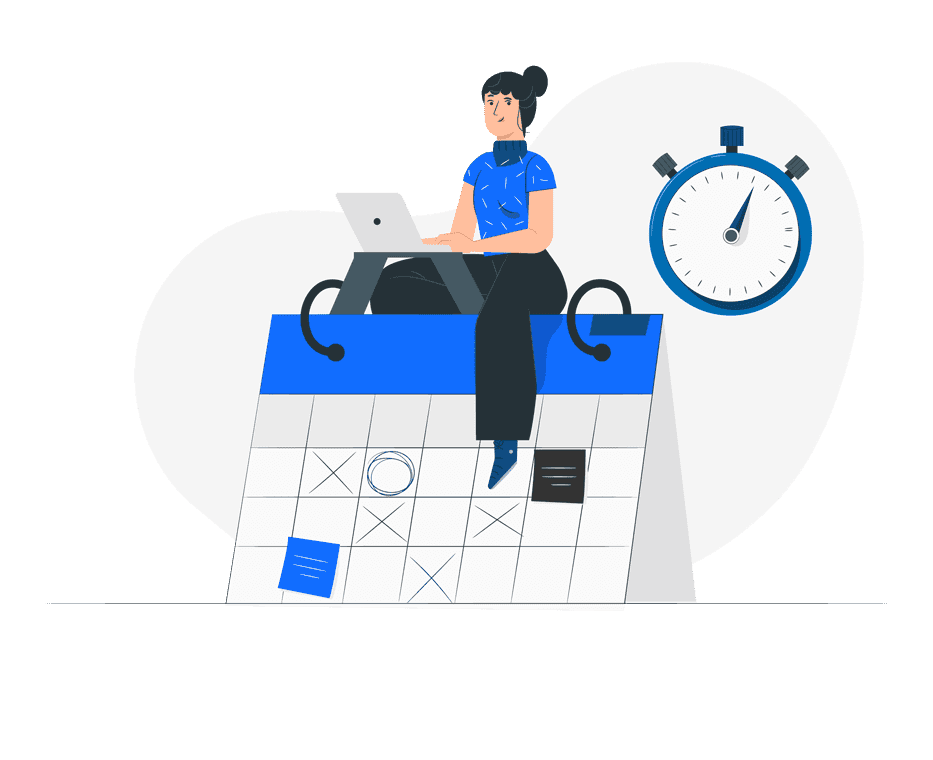
Three days before month-end, a familiar scene unfolds in the HR office. Turnstile badge logs sit on one monitor, pending leave requests on another, and an Excel spreadsheet on a third. Someone places all three side by side to resolve—entry by entry—a single question: "Did this person actually work that day?" When physical access logs and leave requests reside in isolated systems, this manual reconciliation must be repeated every single month prior to running payroll.
Below, you will find where errors typically emerge when this connection is broken, what it costs decision-makers, and the critical checklist to evaluate before pursuing system integration.
A Time and Attendance system (T&A) logs an employee’s clock-in and clock-out timestamps, generating raw attendance and overtime records. A Leave Management system collects employee time-off requests, executes approval workflows, and manages leave balances.
Their intersection is remarkably straightforward: both attempt to answer the exact same question—"Did this employee work on that day?"
The attendance system reports "they showed up" or "they did not." The leave platform reports "their absence was authorized" or "they were expected to be off." When these two answers do not reconcile in a unified record, the payroll dataset becomes inherently inconsistent.
Takeaway for Leadership: When two systems output contradictory answers, deciding which record represents the truth inevitably falls on you or your team.
The following logical scenarios illustrate the structural failure points of disconnected architectures:
|
Scenario |
Manual Reconciliation Overhead |
Operational Impact on Leadership |
|
Punch logged on an approved leave day |
HR manually audits individual punch records |
Risk of miscalculated overtime or wrongful absence penalties |
|
Half-day leave discrepancies |
HR and line managers manually recalculate daily shift targets |
Eroded trust in shift attendance data |
|
Unsynced leave cancellations |
HR cross-checks logs across two separate databases |
Discrepancies in payroll day calculations |
|
Holiday shifts vs. compensatory leave |
HR manually tracks compensatory credit balances |
Entitlement disputes with employees |
|
Leave taken with exhausted balances |
HR executes retroactive adjustments and pay deductions |
Payroll clawbacks and employee friction |
Takeaway for Leadership: None of these incidents look catastrophic in isolation. Each is a minor operational exception—yet as exceptions compound, validation audits easily consume half of a specialist's working week.
Because these operational costs never show up as a standalone line item on an income statement, they are frequently overlooked. They compound across three distinct areas:
Instead of guessing what this costs your organization, measure it directly: track the volume of manual adjustments made during your next month-end payroll close and calculate the person-hours invested in resolving them. That concrete figure will provide the clearest business case for whether integration is necessary. If the volume is negligible, integrating may not be an immediate operational priority—and recognizing that is equally valid executive decision-making.
Takeaway for Leadership: To control an operational cost, you must first quantify it. You cannot reduce a burden you do not measure.
The primary objective of integration is eliminating duplicate records:
[Approved Leave Request] ──(Auto-Sync)──► [T&A Shift Expectation Updated]
│
▼
[Payroll Engine] ◄────────────── [Consolidated, Verified Timesheet]
When a leave request is approved, the attendance engine automatically updates its target shift expectation; if the leave is canceled, the shift requirement reverts immediately. Accruals, recorded hours, and physical presence reconcile against the same operational business logic, providing HR with a single verified dataset rather than two contradictory reports.
However, while integration drastically mitigates human error, it is not a cure-all. Automated systems will reliably duplicate flawed business logic at scale: if a half-day leave rule is configured incorrectly in your policy engine, that error will execute systematically across every department. Integration is therefore as much an exercise in policy standardization as it is a software rollout.
Takeaway for Leadership: The business goal of software integration is not reducing headcount; it is freeing your existing team from repetitive data cleanup so they can deliver higher-leverage operational value.
Before connecting systems technically, your operational workflows must resolve the following questions:
Note: Statutory compliance requirements (such as retaining mandatory overtime logs and tracking annual statutory leave accruals) vary across jurisdictions and labor codes. Verify your baseline regulatory obligations with qualified legal and labor relations counsel.
Takeaway for Leadership: If any item on this checklist lacks a clear operational answer, resolving that organizational ambiguity must precede the technical implementation.
A clear distinction is essential: Ming is not a Time and Attendance (T&A) platform. It does not capture physical biometric badging, turnstile event data, or process raw timesheet calculations.
Ming operates across the employee-facing layer of HR operations. Employees submit time-off, salary advance, and business expense requests through intuitive mobile and web interfaces; line managers review approval workflows in real time; and status updates trigger automatic push notifications.
Because Ming integrates with leading core HR and enterprise ERP systems, you do not need to replace your established transactional databases. How that data exchanges with your specific attendance hardware and back-office setup is tailored to your architecture during deployment.
Takeaway for Leadership: The platform where an employee initiates a request does not have to be the exact same database where access control data is audited—provided the pipeline connecting them is clearly structured.
Before evaluating software vendors, run these diagnostic questions internally:
If your answers predominantly point toward manual spreadsheets and continuous intervention, you have an immediate operational bottleneck.
To unify your leave management, employee approvals, and internal requests within a streamlined, mobile-first ecosystem, visit mingapp.co to schedule an executive demo with our solutions team.
Employees submit requests from their phone and approvals flow through Ming. If you have an HR or ERP system, Ming connects to it; if not, you run the processes directly in Ming.